


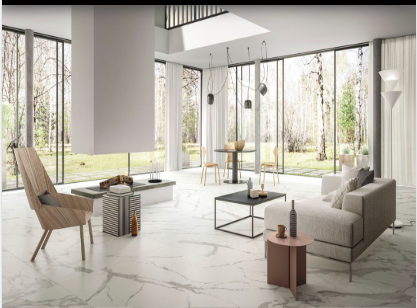



What is the Difference Between Marble and Granite
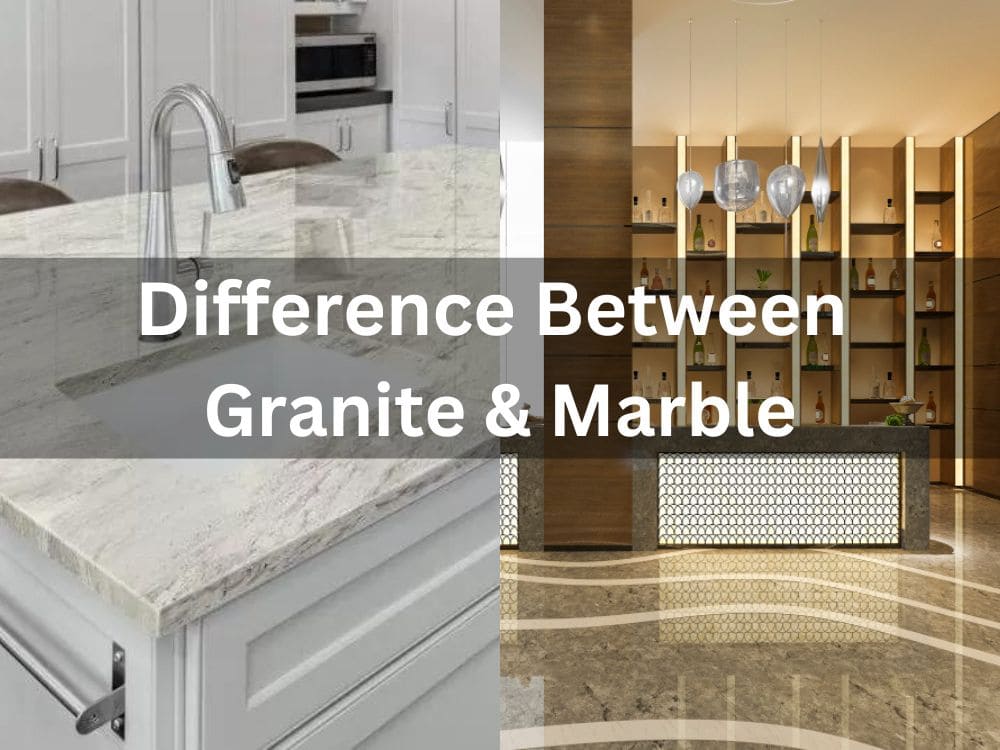
During the last decade, both Marble and Granite have become very popular choices among homeowners and interior designers for kitchen and bathroom countertops. Also, people are now more keen to learn more about granite vs marble countertops, which is better for kitchens, vanities, countertops, outdoor applications, and multiple other applications.
As a part of educating our esteemed consumers, A-Class Marbles presents this article on marble vs granite to provide you with clarity.
Though these are both natural stones quarried directly from the Earth with a lot of similarities, these stones have significant differences too that can influence your decision as to what you should install in your space.
Marble and Granite Difference: A Quick Comparison Chart
Before we get into the details a little deeper, here’s a quick Marble and Granitecomparison for an idea.
Durable
Granite: More durable
Marble: Less durable
Acidic Food Resistant
Granite: Yes
Marble: Mostly no
Damage By Cleaning Agents
Granite: Depends on the product. Always use gentle soaps.
Marble: Depends on the product. Always use gentle soaps.
Porous
Granite: Yes
Marble: Yes
Heat Resistant
Granite: Yes
Marble: Yes
Scratch Resistant
Granite: Mostly
Marble: Depends on the marble you choose
Stain
Granite: Yes
Marble: Yes
Good For Outdoor Applications
Granite: Yes
Marble: Yes, but proper sealants are mandatory
Maintenance
Granite: Yes
Marble: Mostly no
The Origin of Marble and Granite
Granite: When the magma solidifies and cools deeper within the Earth for millions of years, granite formation happens. It’s a classification of igneous rock because of how it originates from magma cooling down. The process involves intense heating and slow cooling, which makes granite an extremely hard material. It consists primarily of very hard minerals like feldspar and quartz.
Marble: Marble is a type of metamorphic stone because it’s a result of the transformation of sedimentary stone, which is another rock type. This rock is formed from the Earth’s sediments mixed with buried plant life within the Earth over millions of years. Intense heat & pressure metamorphose these sedimentary rocks into marble while also incorporating other minerals. That’s the reason why marble gets all those beautiful colors and variations.
Basically, marble's origin is limestone but it gets converted into marble. The reason why it’s softer is because it has calcium carbonate that’s comparatively softer than granite’s components.
How To Identify Marble vs Granite?
Using the easiest approach will help you instantly identify which one is marble and which one is granite.
Scratch the surface of the stone with a knife blade. If the stone is very difficult or hard to scratch, it’s likely to be granite or may be some igneous rock. If you can scratch the surface easily, it’s either marble or limestone.
Though there may be multiple methods, it’s one that gives instant results.
Properties of Marble and Granite
Though granite is more durable than marble, they are both porous. Liquid can peep through them easily if left untreated, causing stains and cracks.
When talking from a comparison point of view, marble’s softness makes it an easy target for staining and damage.
Marble has this tendency of going dull & the most famous example would be the Taj Mahal, made with white marble. Though staining is easy to fix, if it starts to dull, it’s an irreversible process.
What is Granite vs Marble in Terms of Appearance
Both marble and granite are very different where appearance is concerned.
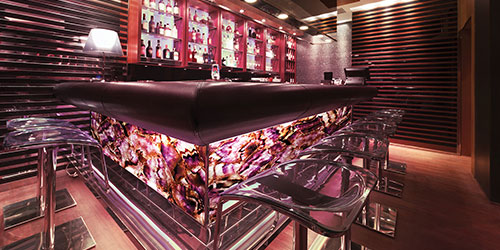
Granite comes in multiple speckled colors that are a result of melded stones in it like quartz, feldspar, biotite mica and also amphibole sometimes. It’s available in a variety of shades & tones.
Marble is typically a solid-colored stone with veins running all through it that’s a result of mineral impurities during its formation. The color varies from gray, white, cream, or a combination.
Granite’s strong and durable characteristics lend it a shiny and glossy appearance, whereas marble has a dull smoothness. But today, even marble can have a glossier look with certain polishing sealants.
Maintenance: Marble vs Granite Countertops
It’s true that all natural stones need different maintenance. If maintenance is one factor you consider while making a decision, this heads up will help you a lot.
Granite is a highly durable and low-maintenance option any day when compared with marble. A proper sealing and resealing after a year of installation is enough to ensure a solid surface. Even minor scratches are easy to repair with simple stone epoxy. But please make a note that if your kitchen is extremely busy, you need extra attention for granite installation.
Marble, on the other hand, is mandatory to protect with a sealant made particularly for porous stone surfaces. Always consider that marble composition is such that it’s prone to staining, doesn’t matter if sealed. So extra care should be taken. Along with this, acidic liquids can really mess up marbles.
Marble and Granite Application
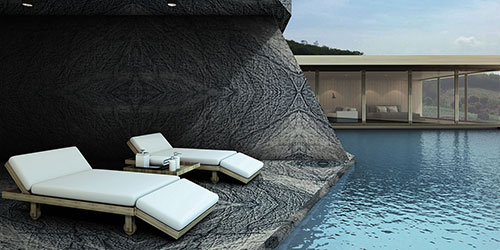
As mentioned above, Granite’s durability makes it an ideal stone for application in traffic areas like kitchen countertops and floors. Marble is appropriate for less crowded areas like a bathroom vanity, shower walls, flooring, etc.
Marbles create a unique look that’s apt for areas not much in use or for people who won’t mind a bit of maintenance.
Wrapping Up
Was the navigation through granite vs marble helpful? From the origin, appearance, identification, maintenance, and application, we tried unfolding everything that our consumers must know. For your next dream project, make a wiser and more informed choice.


Sitemap
- Newsletter
- Catalouge
- Gallery
- Legal & Privacy
- Career
- Share
- Media
- News & Events
- Press Coverage
- Blogs
- Awards
- Signature
- Thasos White
- White Venezuela
- Swiss White
- Rosso Portugal
- Afyon White
- Michel Angelo
- Brazilian White
- Pristine
- Sivec White
- Bianco Scala
- Ari Stone White
- Panda White
- Statuario Toh
- Metallica White
- Golden Spider
- Classique
- De Martino
- Bottichino
- Perlato Sicilia
- Perlato Royal
- Extra Light
- Crema Marfil
- Bianco Marfil
- Virtual Applicator
- Kitchen
- Bathroom
- Bedroom
- Clientele
- Clients
- Testimonial
- Melange
- Red Lavante
- Red Chigani
- Red Verona
- Enigma
- Nero Saint Laurent
- Belgium Black
- Silver Portoro
- Umber
- Dorato Travertino
- Titanium Travertino
- Beige Travertino
- Rustica
- Blue Pearl
- Black Pearl
- Antique Brown
- Exotica
- EXO Brown
- Marinace Black
- Labradorite
- Opera
- Blue Onyx
- Pink Onyx
- Beige Onyx
- Bejewel
- Mother Of Pearl
- Black Mother Of Pearl
- Tiger Eye Black
- Contact
- RAJASTHAN
- NEW DELHI
- GURGAON
- AHMEDABAD
- Exotica
- EXO Brown
- Marinace Black
- Labradorite
- Opera
- Blue Onyx
- Pink Onyx
- Beige Onyx
- Bejewel
- Mother Of Pearl
- Black Mother Of Pearl
- Tiger Eye Black
- Avant Garde
- Brazilian Moon Face
- Statuario Moon Face
- Snow White
- Marble Art Decor
- Array of Emotions
- Avighna
- Humming The Harmony
