





How to Identify Marble and Granite
Marble and granite are the most popular natural stones used in kitchen and bathroom countertops. However, many find it difficult to spot the difference between the two. Both possess unique advantages, making them an ideal choice in interior design. So, if you are planning to renovate your home by giving it a new look with elegance, it is better to start with research. Research, as in, you should know the difference between the two, where to use them, and which is best for your space. Both natural stones can transform your space into aesthetically pleasing and luxurious. Being highly long-lasting, marble and granite countertops will perfectly complement your space. Today, with manufacturing technologies, identifying marble and granite has become nearly impossible. Hence, we have jotted down a list of points that would help you identify marble and granite. By the end of this blog, you can easily understand which can do wonders. So, let’s get started.
Tips To Help You Out Identify Marble And Granite
Marble and granite slabs on the first look, look quite similar, making everyone confused. But the fact is these two natural stones are not similar. Though the two share some similar aspects like both are porous, there are a few differences. If you are a first time buyer, you need to be very cautious as it’s about transforming your space. This section will tell how to identify marble and granite based on certain factors.
Aesthetics
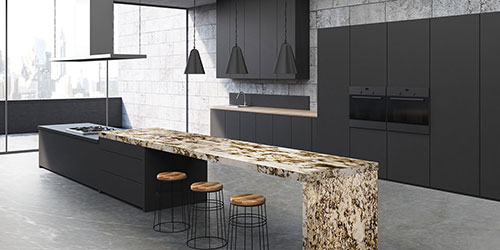
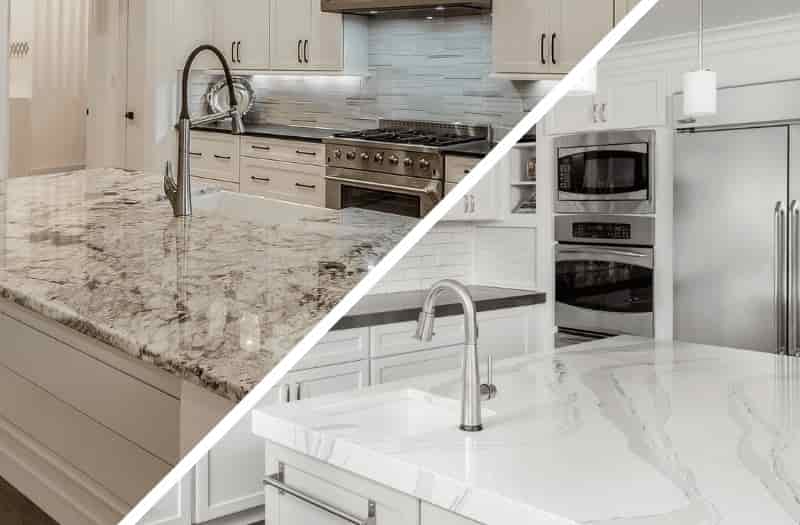
As we have said in our previous blogs too, marble and granite are both natural stones that look quite similar. Nobody can actually spot the difference from the naked eye. They look exactly the same. However, their physical traits will help you make an informed decision. For instance, granite has a small veins or mottled appearance with flecks of different colors on the surface. On the other hand, marble has fairly large veiny patterns and swirls with fairly consistent colors.
Colors
Marble is usually seen in shades of white, gray, and beige, with delicate veins and swirls of different colors running through it. Granite, on the other hand, is available in a wider range of colors, including blacks, blues, reds, greens, and more. Additionally, granite has a speckled or mottled appearance, with specks of various hues spread throughout. By paying attention to these color features, you can easily identify marble and granite and make an informed decision before starting your project.
When talking about color, it is crucial to understand which stone fades its color over time. For the uninformed, a light marble can never retain its glossiness once its color fades away. On the other hand, granite, similar to stain-resistant, can retain its color.
Porosity
Both marble and granite are porous, which means that water penetrates within the countertops and stains them. However, marble is more porous, hence, you will need to seal it more frequently to avoid staining. Although marble is porous, it is also compact and robust and can be an identical option when you choose a kitchen with tough and chic countertops. Due to marble’s high porosity, it spreads off heat and is nearly perfect for hot climates. Granite is less porous, but you should not forget that it is still porous. Therefore, you should not spill oils on its surface, wine, or any other condiments that could stain it.
Cost
Price is another deal-breaker when purchasing countertops, considering that marble is more expensive than granite. Moreover, note that the price of the countertops is not the only purchase cost. It would be best if you also accounted for the installation cost. Since you can’t install the countertops yourself, you need to hire a technician. Installation technicians have varied rates depending on their experience, insurance, and location.
Consequently, you will need to conduct some research to find a contractor who will provide services at the least cost. Hence, refrain from hiring upscale companies when working on a budget, as they will only overcharge you for nothing.
Both granite and marble, known for their unique features, are considered more expensive countertop materials. Granite, often less expensive, still offers a touch of elegance. It costs about three-fifths as much as the luxury stone, marble. On average, granite costs $40 to $100 per square foot, whereas marble, with its unique veining and luxurious appeal, costs $50 to $150 per square foot.
Texture
Marble often has a smooth, elegant texture with subtle veining, offering a rich appearance. Granite, on the other hand, has a coarser and grainier texture, with various color speckles dispersed throughout the stone. Running your fingertips across the surface can help distinguish between the two; marble feels smoother and more polished, while granite may feel somewhat rougher. Examining the surface in good lighting can also reveal the subtle patterns and textural differences that are unique to each stone, aiding in identification.
Hardness
Granite is formed from volcanic action, which has a high Mohs hardness, making it very durable and scratch-resistant. On the other hand, marble is basically made of calcium carbonate, which is softer and prone to scratch. You can identify the marble and granite on the basis of their hardness by doing a scratch test. Granite is subject to less acidic damage, whereas marble is more easily etched.
Durability
Granite is more durable than marble. Granite is the toughest natural stone with high Mohs hardness. Its strong composition makes it highly resistant to scratching, staining, and chipping, making it an excellent choice for high-traffic areas such as kitchen countertops. Marble, while attractive and luxurious, is softer and more prone to scratches and etching from acidic materials. It is less durable and requires more maintenance to keep its beauty intact.
Water Absorption
The best way to identify marble and granite is to perform a water absorption test. Marble absorbs water quickly, resulting in a black stain on the surface. In contrast, granite repels water, causing it to bead up rather than soak quickly. This happens due to marble's porous nature, which allows water to penetrate easily, but granite has a denser structure that prevents water absorption. You can conduct a simple water test. All you have to do is pour a few drops of water on the surface. If the surface becomes black, it is marble; otherwise, it is granite.
Origin
Marble is formed from high pressure and heat on limestone, which is commonly found in areas with ancient seabeds. Italy, Greece, and Turkey are well-known for their marble deposits. Granite, on the other hand, is formed when molten magma cools beneath the Earth's surface, making it prevalent in volcanically prone regions. Countries such as Brazil, India, and China have large granite reserves. Understanding the geological history of each stone and its formation places helps with architectural and design considerations.
Also Read: WHICH IS BETTER FOR KITCHEN GRANITE OR MARBLE?
Conclusion
With the above guide, you can never really go wrong with choosing marble for its delicate elegance or granite for its polished exterior. Both countertop materials, marble and granite, can add value to your home. Similarly, both have a few differences. In the end, it’s your choice which natural stone you want to choose for your home.
If you are planning to renovate your house and need the help of a professional, the expert team at A-Class Marble is right there to help you. Our professionals will help you identify marble and granite and assist in making the decision. Apart from this, if you are decked up with research work and looking for a broad selection of styles, feel free to visit https://www.aclassmarble.co.in/.
Also Read: HOW MANY TYPES OF MARBLE


Sitemap
- Newsletter
- Catalouge
- Gallery
- Legal & Privacy
- Career
- Share
- Media
- News & Events
- Press Coverage
- Blogs
- Awards
- Signature
- Thasos White
- White Venezuela
- Swiss White
- Rosso Portugal
- Afyon White
- Michel Angelo
- Brazilian White
- Pristine
- Sivec White
- Bianco Scala
- Ari Stone White
- Panda White
- Statuario Toh
- Metallica White
- Golden Spider
- Classique
- De Martino
- Bottichino
- Perlato Sicilia
- Perlato Royal
- Extra Light
- Crema Marfil
- Bianco Marfil
- Virtual Applicator
- Kitchen
- Bathroom
- Bedroom
- Clientele
- Clients
- Testimonial
- Melange
- Red Lavante
- Red Chigani
- Red Verona
- Enigma
- Nero Saint Laurent
- Belgium Black
- Silver Portoro
- Umber
- Dorato Travertino
- Titanium Travertino
- Beige Travertino
- Rustica
- Blue Pearl
- Black Pearl
- Antique Brown
- Exotica
- EXO Brown
- Marinace Black
- Labradorite
- Opera
- Blue Onyx
- Pink Onyx
- Beige Onyx
- Bejewel
- Mother Of Pearl
- Black Mother Of Pearl
- Tiger Eye Black
- Contact
- RAJASTHAN
- NEW DELHI
- GURGAON
- AHMEDABAD
- Exotica
- EXO Brown
- Marinace Black
- Labradorite
- Opera
- Blue Onyx
- Pink Onyx
- Beige Onyx
- Bejewel
- Mother Of Pearl
- Black Mother Of Pearl
- Tiger Eye Black
- Avant Garde
- Brazilian Moon Face
- Statuario Moon Face
- Snow White
- Marble Art Decor
- Array of Emotions
- Avighna
- Humming The Harmony
