




How to Choose Marble for Flooring
Building a new home is quite challenging because you have to keep every minute detail in mind while choosing stuff. Choosing a color for the ceiling to marble for the flooring is not easy. Choosing the right marble, especially for flooring, is critical because marble is a durable and elegant stone that doesn't fade away for long. Its shine and attractiveness makes it an apt choice. You'll fall in love with this lovely stone no matter where you place it. Well! Every marble item is stunning, but that does not mean you will find the ideal marble for your home so quickly. So, for your ease, we've jotted down a list of tips you need to keep in mind while choosing marble for flooring.
What does a marble floor actually look like? Marble is beautiful, but it has unique features that you must learn about first. What kind of marble flooring is installed in which room? Is this safe? Expensive? Easy to maintain? How do I choose the slabs? Marble stone comes in a variety of colors, including white, green, beige, brown, pink, red, and black. It is a metamorphic rock that shines when polished. Marble floor slabs are made from marble stone blocks, which are hard and dense. If you want to bring home this robust stone floor, make sure you evaluate the criteria outlined below.
Also Read: Which color marble is best for flooring?
Tips to Choosing Marble for Flooring
If you’re planning to install marble flooring into your home interior, stay tuned to this blog. We will walk on the different types of marble available, how to choose the best one for your flooring, and the right designer.
-
Understanding Different Types of Marble
Marble flooring comes in various styles, mainly classified into three categories based on their appearance:
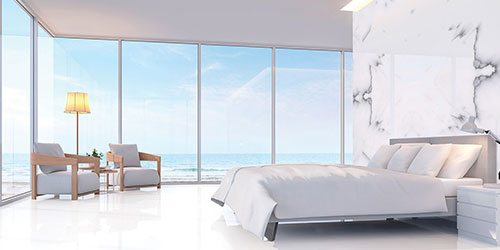
Carrara Marble: Known for its historical significance in ancient Greece and Rome, Carrara is a popular choice. It’s predominantly white with medium to light gray veining, available in shades from light to warm white.
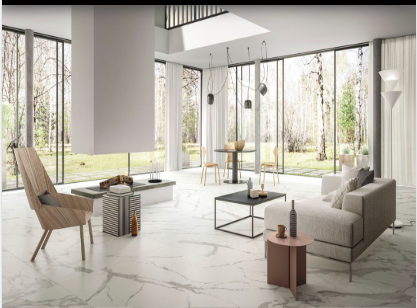
Calacatta Marble: Similar to Carrara but purer in white, Calacatta features darker, more dramatic gray veining, providing a striking contrast that stands out more than Carrara.
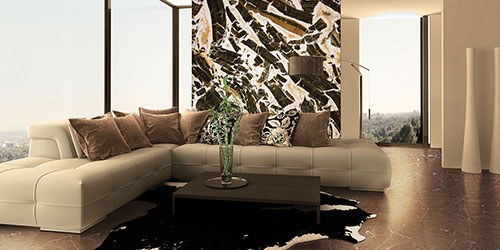
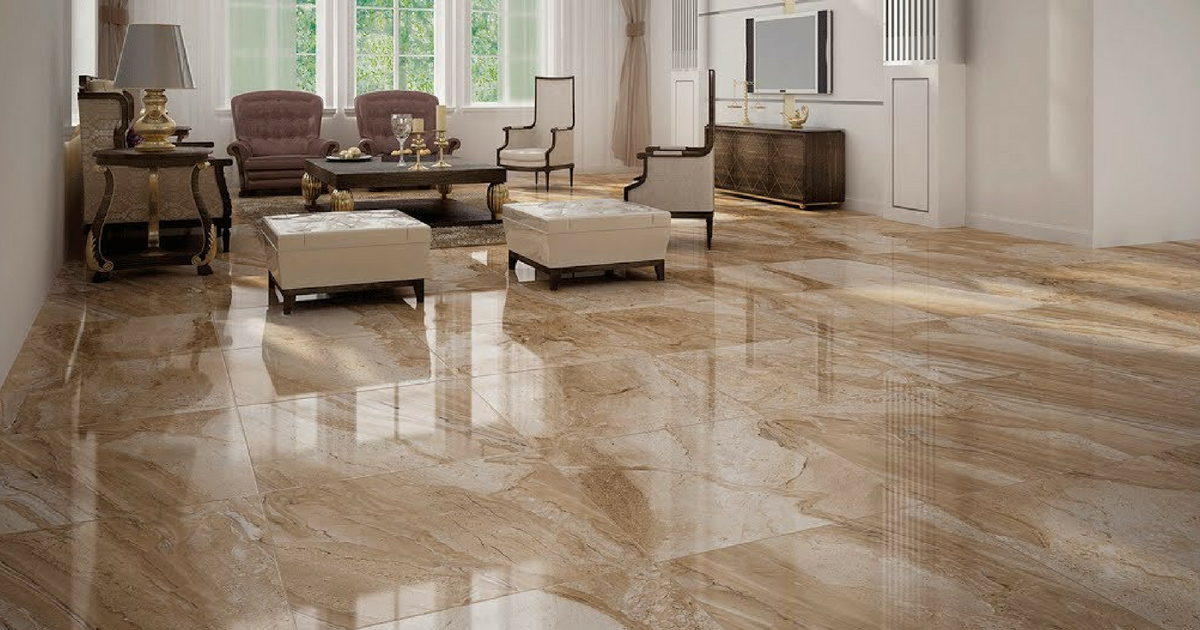
Breccia Marble: For those captivated by darker marble, Breccia offers a rich palette including warm golds, tans, deep browns, blacks, and reds. It often has intricate dark gray and black veining, sometimes forming bubble-like patterns on the surface.
-
Choosing the Right Finish
Marble doesn’t always have to be shiny. You can choose between a polished or honed finish depending on the desired look and the room’s function:
Polished Marble: Achieved through stone-polishing machines, polished marble is glossy and luxurious, highlighting the stone’s veining. With proper maintenance, this finish retains its shine for many years.
Honed Marble: This finish is smooth but not shiny, giving a matte look that many find more understated and durable. It’s less slippery and ideal for areas prone to moisture.
-
Optimal Tile Sizes for Home Installation
Marble tiles are available in various sizes, but for homes, tiles smaller than 2 feet across are most common. Larger slabs, typically used in commercial settings, require special handling due to their weight. Residential tiles usually range from ¼-inch to ¾-inch thick, while commercial slabs can be up to 2 inches thick. Quality considerations include the density and surface design, with higher-end tiles being more durable and less prone to damage.
-
Addressing Slipperiness
Polished marble, while beautiful, can be slippery when wet. To mitigate this, use area rugs with non-slip backings or apply anti-slip treatments like SlipDoctors’ Stone Grip Anti-Slip Treatment. Honed marble is naturally less slippery, making it a safer choice for households with higher fall risks.
-
Cost Considerations
Marble flooring is generally expensive due to the labor-intensive process of quarrying and finishing. Prices range from $5 to $40 per square foot depending on quality and design. Installation adds another $3 to $7 per square foot. For a budget-friendly option, consider marble-look flooring in ceramic, vinyl, or laminate, which costs significantly less.
-
DIY Installation: Proceed with Caution
Installing marble flooring yourself can save money if you have tile-laying experience. Ensure the subfloor is perfectly flat and use cement board underlayment to prevent moisture damage. Marble tiles can be laid tightly for a smooth finish or with grout gaps, using unsanded grout to avoid scratching.
-
Maintain Marble Flooring with Daily Cleaning and Regular Sealing
Marble flooring is renowned for its elegance and durability, but it does demand a bit of extra care to maintain its beauty. Daily cleaning is essential; sweeping up sand or grit helps prevent scratches. Address spills immediately—especially acidic liquids like orange juice or vinegar, which can stain. Water might not stain, but over time, it can dull the surface if left unchecked. Sealing your marble floors is also crucial.
For polished marble, an annual sealant application, such as Miracle Sealants’ 1-Step Natural Stone Sealer and Color Enhancer, is recommended. Honed marble, being more porous, benefits from sealing twice a year. When it comes to mopping, use a mild, non-acidic cleaner. Ensure the product specifies it’s safe for marble, or make your own gentle solution with ½ cup of ammonia and 1 tablespoon of dish soap mixed in a gallon of water.
-
Addressing Scratches, Stains, and Cracks in Marble Floors
Even with the best care, marble floors can show signs of wear over time. Common issues include dullness, scratches, and occasional chips or cracks. While many minor issues can be handled with DIY marble repair kits and quality marble polishes, some situations may require professional attention. For surface scratches and dullness, clean the area thoroughly, buff with a damp cloth, and apply marble polish in thin coats.
Multiple applications may be necessary to restore the shine. For more severe wear, consider hiring a professional to hone and polish the floor, typically costing between $600 and $1,000 for a 200-square-foot area. Deep scratches and chips often require professional restoration. Chips can lead to cracks, which need to be filled with a professional-grade adhesive and then refinished and polished for the best results.
-
Keeping Marble Floors Warm with Heating Options
One common concern with marble flooring is its tendency to feel cold underfoot. However, marble’s high thermal conductivity makes it an excellent candidate for heating systems, providing a cozy and energy-efficient solution. There are two primary options for heating marble floors: toe-kick heaters and under-floor heating systems.
Toe-kick heaters are easy to install along the base of vanities or cabinets, making them suitable for existing marble floors. These units, starting at about $50, can plug into a standard 120-volt outlet, though larger units might require a licensed electrician. Under-floor heating, on the other hand, must be installed beneath the marble, making it ideal for new installations. This type can be hydronic, using hot water circulated through tubing, or electric, using cables. Costs vary based on the floor’s size, with starter kits beginning around $100. This investment can significantly enhance comfort and efficiency in your home.
Also Read: 12 Types Of Marble Flooring For Your Home
Bottom Line
Marble flooring is beautiful and luminous, adding an undeniable air of luxury to the areas it covers. It has been a popular flooring choice for decades because of its unique veined appearance and the fact that no two marble floors are alike.
It is said that you get what you paid for. Don't think you are paying high. Even at a higher cost, superior grade marble will last a lifetime, giving your home a traditional vintage and classy style without breaking the budget year after year. All you have to do is choose a reputable and reliable marble company, such as A-Class Marble, to ensure you get the best value for your money.


Sitemap
- Newsletter
- Catalouge
- Gallery
- Legal & Privacy
- Career
- Share
- Media
- News & Events
- Press Coverage
- Blogs
- Awards
- Signature
- Thasos White
- White Venezuela
- Swiss White
- Rosso Portugal
- Afyon White
- Michel Angelo
- Brazilian White
- Pristine
- Sivec White
- Bianco Scala
- Ari Stone White
- Panda White
- Statuario Toh
- Metallica White
- Golden Spider
- Classique
- De Martino
- Bottichino
- Perlato Sicilia
- Perlato Royal
- Extra Light
- Crema Marfil
- Bianco Marfil
- Virtual Applicator
- Kitchen
- Bathroom
- Bedroom
- Clientele
- Clients
- Testimonial
- Melange
- Red Lavante
- Red Chigani
- Red Verona
- Enigma
- Nero Saint Laurent
- Belgium Black
- Silver Portoro
- Umber
- Dorato Travertino
- Titanium Travertino
- Beige Travertino
- Rustica
- Blue Pearl
- Black Pearl
- Antique Brown
- Exotica
- EXO Brown
- Marinace Black
- Labradorite
- Opera
- Blue Onyx
- Pink Onyx
- Beige Onyx
- Bejewel
- Mother Of Pearl
- Black Mother Of Pearl
- Tiger Eye Black
- Contact
- RAJASTHAN
- NEW DELHI
- GURGAON
- AHMEDABAD
- Exotica
- EXO Brown
- Marinace Black
- Labradorite
- Opera
- Blue Onyx
- Pink Onyx
- Beige Onyx
- Bejewel
- Mother Of Pearl
- Black Mother Of Pearl
- Tiger Eye Black
- Avant Garde
- Brazilian Moon Face
- Statuario Moon Face
- Snow White
- Marble Art Decor
- Array of Emotions
- Avighna
- Humming The Harmony
