



An Encyclopedia Of Marble Its Types and Their Prices
Marble due to its rich design and luster appeal has been looked at as being classy and royal for centuries. Able to embellish various types and hues over thousands of years, archaeology and ornamental trends of sterling natural stone enchanted today’s architecture aficionados. In this detailed guide, we put the high-brow subject of marble under the microscope, share more on the different subtypes and prices thereof.
Understanding Marble
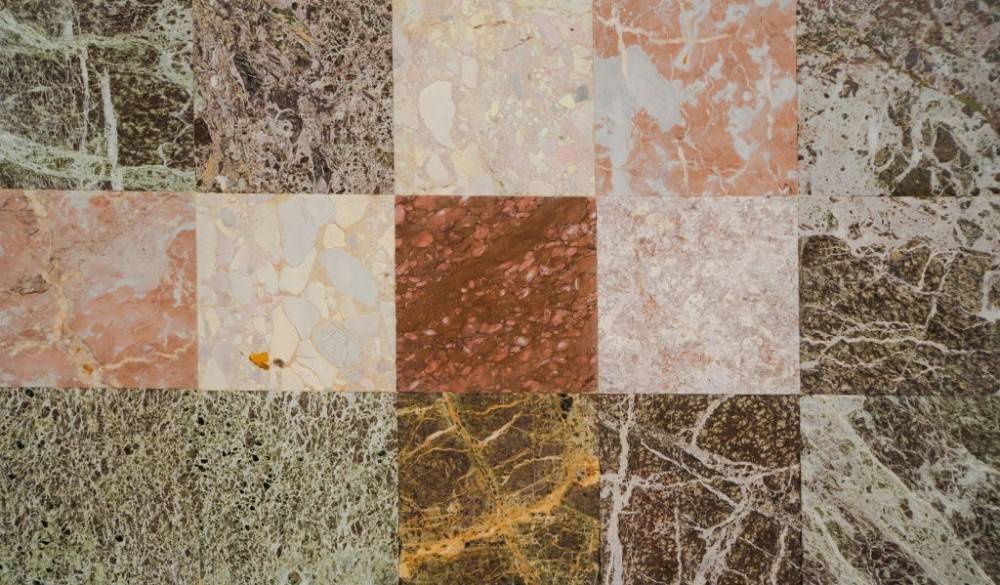
Marble is a type of rock that is derived from limestone, and is produced where this rock has been subjected to heat and pressure deep below the surface of the earth. The formation of marble causes it to develop its signature veins as well as its rather distinct kinds of colors together with the veining, thereby providing each slab cut from the source as a masterpiece product. Marble is one of the most popular types of stone material as it has its natural characteristics of variation in color and texture which can be applied for countertops, flooring, wall cladding as well as for decorative purposes.
Importance of Marble Types
Different types of marbles exist, and each has its distinct features that make it fit for a specific hue and the intended use. This is because the choice whether to use marble and which type produces a definite image and atmosphere within a space – be it classic or modern. Hence, color, veining, and origin are some of the most important aspects that can influence the user application considered and the cost of marble for that particular use.
It is only when you are able to discern between these differences that you will be able to make a rational choice when choosing the right marble to use in your home or business. Whether choosing Carrara marble for a more traditional Old World appearance, or Calacatta for a decidedly opulent finish, this versatile stone lends a hand to crafting elegant and stylish surroundings.
Types of Marble
Let's delve into the details of different types of marble, exploring their origins, appearances, uses, and significance in various applications.
1. Carrara Marble
Origin: Carrara, Italy
Appearance: This canter has the common white to blue-gray coloration with fine feathery vein like patterning.
Uses: The Carrara marble is therefore popular for sculptures and classical architectural uses as this makes them have that unique and timeless design. It has been used as a given material since the ancient days and is an emblem of elegance to the present generation.
2. Calacatta Marble
Origin: Carrara region, Italy
Appearance: It is a white-colored marble characterized by strong and contrasting straight lines veining that may vary from gray to yellowish hue.
Uses: Calacatta is widely recognized as one of the premium marbles it is utilized in superior dwelling and business establishments. While it has a relatively low density of vein patterns, the overall appearance provides opulence to any interior design and is commonly used for countertops and feature walls.
3. Statuario Marble
Origin: Carrara, Italy
Appearance: Domain: mainly white ; Veining: gray to gray-brown, usually sharply contrasting and consistently thick.
Uses: Statuario marble represents luxury and elegant features, with an appealing sheen. They are especially used for high-end residential interiors, applicable to the floor, wall, and countenances. Owing to its vibrant shine and denser patterns, it is suitable for those desiring sophisticated spaces.
4. Emperador Marble
Origin: Spain
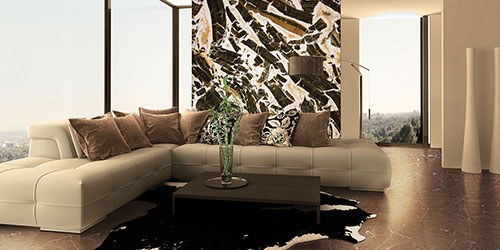
Appearance: High contrast dark, distinguished brown background with creamy light streaks often with a hint of beige or gold intermission.
Uses: Emperador marble can actually be used as flooring, countertops and even for framing a fireplace. This material is cozy and has natural color differences that enable it to create a luxurious appeal to residential and commercial properties.
5. Crema Marfil Marble
Origin: Spain
Appearance: Light creamy beige tone, medium density, with lighter veining that can be thin to moderately thick.
Uses: Crema Marfil is quite flexible and can be integrated into a number of crucial and visual areas such as floors, walls, and vanity in the bathrooms. Its color and the fine lines that run across its surface, make it perfect in complementing any establishment’s atmosphere, while exuding a more subtle sophistication.
6. Nero Marquina Marble
Origin: Spain
Appearance: Purplish opaque color with dominant white marbling and ranging from almost black to more gray tones.
Uses: Nero Marquina marble has a striking appearance and it is preferably employed for interior details like pattern walls, ornamental panels, and flooring considerations in modern and traditional concepts.
7. Onyx Marble
Appearance: Onyx marble is transparent and has several colors with attractive patterning and is the variety used for crafting lamps.
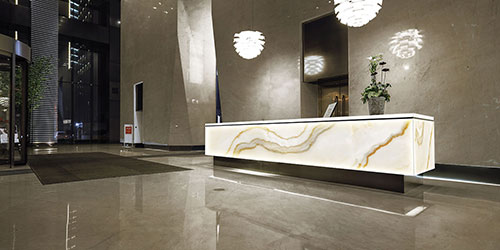
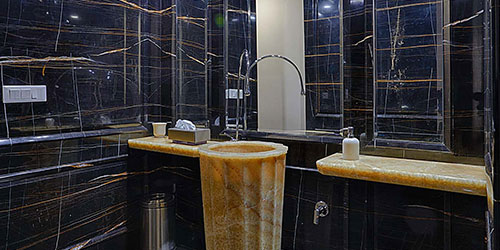
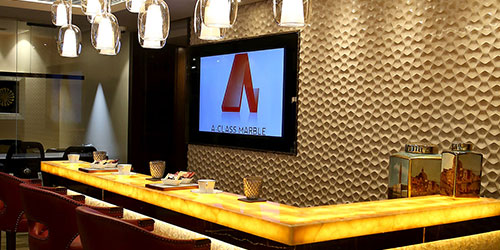
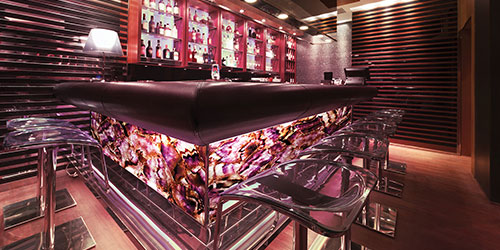
Uses: Onyx marble is prized under the glow as it gives excellent effects when lit up in bars, countertops, or walls. Due to its ability to allow light through whilst being used as a wall, it is preferred by many for designing sophisticated interiors.
Factors Affecting Marble Prices
Let's go into detail about the factors that influence marble prices:
Origin and Rarity:
Origin: Marble’s cost depends on the geographical location of its extraction, specifically the quarrying location. Simply that marble originating from famous areas like Carrara in Italy or Makrana in India is reputed to be of superior quality besides having rich historical associations. These quarries get associated with marble that has the right properties for things like color and the direction of the lineaments.
Rarity: This affected price also depends on the availability of a particular kind of marble in the market, that is, if the marble is rare it is likely to be sold at a higher price. Other products are scarce essentially because the quarrying possibilities are few or owing to specific geological conditions which are all costly and well-admired for their worth by collectors and premium schemes.
Color and Veining:
Color: The examination of the base color of the marble – whether it is white, beige, brown, or black strongly determines the price range it falls under. Of all types of marbles, those that are creamier like the Carrara or Statuario marbles are definitely more costly because they have always been popular with design enthusiasts because of their neutrality in design.
Veining: Thickness of the marble slab, and specific standard, special arrangement, contrast, density, frequency, size and intensity of the vein within the slab also determine the price of the marble. Large and dense-patterning veins are better appreciated in pavé and can have higher values due to the special image they provide to the stone.
Quality and Grade:
Grade: Marble is carved into various classes or quality depending on factors such as the purity of the stone, the clarity of the marbling, and beauty. Premium CSA marbles, which possess fewer flaws and possess smoother colors and patterns, are comparatively dearer to substandard CSA marbles.
Quality: Another factor that affects the price structure of the marble is its overall ability in terms of performance, hardness, and shine, coupled with its durability on surfaces where it is used. There is often a regular type of marble more workable and which needs little processing or cleaning and this type will be likely to cost more.
Thickness and Size:
Thickness: Marble slabs that are thicker than the standard ones cost more money as there is more material utilized, and also as it is costly and complicated to transport and cut thicker blocks of marble. The thick slabs are highly recommended to be used in areas with more traffic and structural works, which means that they have to be strong.
Size: It is important to note that the size of the slab specifically in width and length does have an effect on the price of the marble slab. A compilation of data gathered from manufacturer and suppliers indicate that larger slabs cost more since they could offer more usable surface area and are ideal for large format projects.
Finish and Processing:
Finish: Depending on the kind of application provided to the marble surface to create its finish, which can be polished, honed, brushed, or leathered, it receives its price. Honed marble, which has been honed to an even smoother surface than polished marble, is also likely to be a carver as the polishing process is very time-consuming.
Processing: However, further processes done on marble may bring out certain regions that can be the subject of intense pressure, presence of natural cracks, or lack of color uniformity, all of which if treated, will definitely add to the general expense of marble. All these processes are meant to bring some transformation in the appearance or functionality of the stone.
Market Demand and Trends:
Demand: Occasionally volatilities in the market and its demand on certain quality or type of marble affects the prices. They claimed that all the different types of marble have different trends resulting from changes in interior design, architecture, and consumers’ preferences that determine the popularity and the high price of different marble kinds at a certain period.
Economic Factors: The other internal factors consist of economic risks such as changes in currency exchange rate, disruptions in supply chain network, political risk related to trade and transportation, and other issues impacting international trade are also likely to affect marble prices in the world market.
Pricing Guide
These are the basic prices you may get. For the exact pricing, you need to connect with the reputable company.
Carrara Marble: $50 - $90 per square foot
Calacatta Marble: $100 - $250 per square foot
Statuario Marble: $150 - $300 per square foot
Emperador Marble: $60 - $100 per square foot
Crema Marfil Marble: $40 - $80 per square foot
Nero Marquina Marble: $80 - $150 per square foot
Onyx Marble: $100 - $500 per square foot (depending on quality and rarity)
Also Read: Everything You Need to Know About Italian Marble
Conclusion
Selecting the right marble thus requires an appreciation of its special features as well as the ability to envision the beauty it will add to the specific project. Marble is a beautiful material that adds timeless elegance to any room no matter if you choose Carrara marble or Calacatta; both these materials have a luxurious look and are very durable.
A class marble is a company that deals with marbles and offers a lot of products of this material at a lower price. Specialized for the quality products and customer first policy, we help with decision making and guarantees a hassle-free process from choosing to the installation. Check out the carefully selected marbles conveniently displayed in large slabs at our showroom.
Also Read: What is the Difference Between Marble and Granite


Sitemap
- Newsletter
- Catalouge
- Gallery
- Legal & Privacy
- Career
- Share
- Media
- News & Events
- Press Coverage
- Blogs
- Awards
- Signature
- Thasos White
- White Venezuela
- Swiss White
- Rosso Portugal
- Afyon White
- Michel Angelo
- Brazilian White
- Pristine
- Sivec White
- Bianco Scala
- Ari Stone White
- Panda White
- Statuario Toh
- Metallica White
- Golden Spider
- Classique
- De Martino
- Bottichino
- Perlato Sicilia
- Perlato Royal
- Extra Light
- Crema Marfil
- Bianco Marfil
- Virtual Applicator
- Kitchen
- Bathroom
- Bedroom
- Clientele
- Clients
- Testimonial
- Melange
- Red Lavante
- Red Chigani
- Red Verona
- Enigma
- Nero Saint Laurent
- Belgium Black
- Silver Portoro
- Umber
- Dorato Travertino
- Titanium Travertino
- Beige Travertino
- Rustica
- Blue Pearl
- Black Pearl
- Antique Brown
- Exotica
- EXO Brown
- Marinace Black
- Labradorite
- Opera
- Blue Onyx
- Pink Onyx
- Beige Onyx
- Bejewel
- Mother Of Pearl
- Black Mother Of Pearl
- Tiger Eye Black
- Contact
- RAJASTHAN
- NEW DELHI
- GURGAON
- AHMEDABAD
- Exotica
- EXO Brown
- Marinace Black
- Labradorite
- Opera
- Blue Onyx
- Pink Onyx
- Beige Onyx
- Bejewel
- Mother Of Pearl
- Black Mother Of Pearl
- Tiger Eye Black
- Avant Garde
- Brazilian Moon Face
- Statuario Moon Face
- Snow White
- Marble Art Decor
- Array of Emotions
- Avighna
- Humming The Harmony
